
Water Heater Installation
What any new water heater install involves, tank or tankless: sizing, venting, connections, and safety checks.
Tankless Water Heaters — Pocatello, ID
Hot water that does not run out, in a unit the size of a suitcase — sized, installed, and maintained for Pocatello's hard water and cold winters by independent local plumbers.
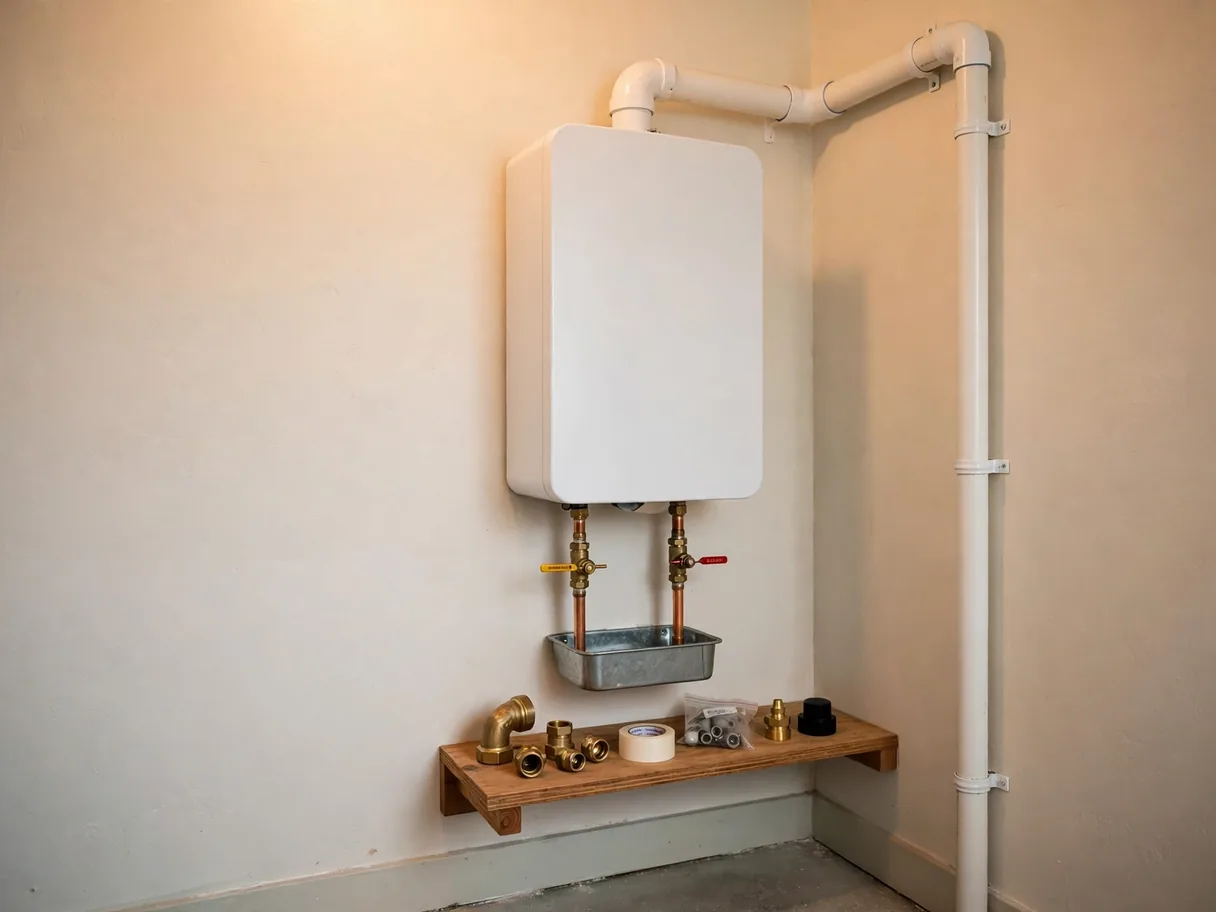
A tankless water heater makes hot water when you ask for it and not before. There is no fifty-gallon tank reheating itself all day in your basement, and no tank quietly filling with the mineral sediment that Pocatello's very hard water — 15.2 grains per gallon — leaves in every conventional heater in the city. For households that run the last shower cold, for homes where the heater closet is also needed for storage, and for owners tired of the tank replacement cycle — ten to twelve years on a manufacturer's label, commonly less in this water — going tankless is a real option, and the plumbers we connect you with install and service Navien, Rinnai, and Noritz units across the valley.
It is not the right answer for every house, and this page will not pretend otherwise. A tankless conversion costs more upfront than a tank swap, it asks more of your gas line or electrical panel, and in water this hard it comes with a yearly chore. The sections below lay out each of those plainly, because a tankless unit chosen with open eyes is a twenty-year appliance, and one chosen off a brochure is a callback waiting to happen.
Tanks are sized by how much they hold. Tankless units are sized by how much they can heat per minute — and that number shrinks as incoming water gets colder. This is where Pocatello winters change the math. Groundwater here arrives cold in January, and a unit has to lift it further to reach shower temperature than the same unit in a mild climate. A heater rated generously on a national chart can fall short on a bench home above the Portneuf in February.
So the sizing conversation starts with your fixtures, not the catalog. How many showers can run at once? Does the laundry run during morning showers? Is there a soaking tub with a high-flow filler? The plumber adds up that peak flow, applies our winter temperature rise, and picks a unit with headroom. Homes around Idaho State University with several adults on different schedules, and larger family homes in Chubbuck, are the ones where this sizing matters most — and where an undersized unit earns its bad reputation.
Scale is the tankless unit's version of a tank's sediment problem. The same minerals coat the heat exchanger's narrow passages, and as they build, the unit works harder, gets louder, and eventually throws error codes and shuts down to protect itself. The remedy is a descaling flush — pumping a cleaning solution through the unit to dissolve the scale — about once a year in water as hard as ours. Many owners pair a tankless unit with water softeners to cut the mineral load before it arrives, which stretches the interval and protects every other fixture in the house at the same time.
If your current unit is a tank that is failing, the comparison belongs in the water heater replacement conversation, where the plumber can price both paths side by side. If your tank still has years left, a tankless conversion can still make sense for the right household — the water heater installation page covers what the conversion work itself involves, from gas line upsizing to venting.
Most tankless installs in Pocatello are gas, and the reason is capacity: a gas burner can deliver the high flow a whole house demands on a January morning, when incoming water is at its coldest and the temperature rise the unit must produce is at its largest. Electric tankless units exist and suit smaller demands — a single bathroom, a small home, a point-of-use spot — but a whole-house electric unit draws very heavy amperage, and many panels in this city cannot spare it without an upgrade that erases the economics. The plumber measures both your gas supply and your panel before steering you, and the right answer follows your house, not a preference. Whichever fuel you land on, the unit's venting, sizing, and hard-water plan get settled in the same visit.
A conversion removes the old tank, mounts the unit on a wall, and connects water, gas or electrical, and venting — usually stainless or PVC venting run fresh, since tankless exhaust differs from a tank's flue. Most Pocatello homes need the gas line upsized, because a tankless burner draws far more gas at full fire than a tank burner does. Electric models need heavy circuits that many panels cannot spare without an upgrade. The plumber checks both before quoting, so there are no surprises mid-job.
When it is done, you get hot water that keeps coming — shower after shower — and a corner of your basement or garage back. Call (208) 753-1090 and describe your household and the heater you have now. We will match you with an independent local plumber who will size a unit for your home and our winters, price the conversion honestly against a new tank, and let you decide with both numbers in front of you. If your existing tank has failed and left you cold today, say so — that routes as emergency plumbing while the tankless decision gets made.
FAQ
Instead of storing forty or fifty gallons of hot water, a tankless unit heats water as it moves through the unit, only when a hot tap opens. When the tap closes, the unit shuts off. That is why a tankless heater does not run out of hot water the way a tank does — but it does have a maximum flow, so the unit has to be sized to how much hot water your home uses at once.
It can be, with maintenance. Pocatello's 15.2-grain water builds scale inside a tankless heat exchanger just like it builds sediment in a tank, and a scaled-up exchanger loses efficiency and eventually faults out. The fix is a descaling flush, typically yearly in water this hard, and many local owners pair the unit with a water softener to stretch the interval. A plumber will talk through that upkeep honestly before recommending one.
A tankless install costs more than a like-for-like tank swap because it is a conversion: the unit itself, a larger gas line or heavier electrical service in most homes, new venting, and the plumbing changes to connect it. What it costs in your home depends on which of those your house already has. The plumber measures your gas supply or panel, your venting route, and your peak demand, then quotes the whole conversion before work begins.
Tankless units are sized by flow — gallons per minute at the temperature rise your home needs. A plumber adds up the fixtures that can run at once, then adjusts for Pocatello winters: the colder the incoming groundwater, the harder the unit works to raise it to shower temperature, and the less flow it delivers. A unit that looks big enough on a mild-climate chart can be too small here, which is why sizing is done from your fixtures and our winter water, not a brochure.
A correctly sized unit, yes — it is built to serve every tap in the home at once, up to its flow limit. What it cannot do is serve more than that limit: three showers, the laundry, and the dishwasher at the same moment will test any single unit. Larger households sometimes use two units or keep demand realistic. A plumber will add up your peak use and tell you where the limit sits.
Tankless units generally outlast tank heaters, largely because there is no tank of water corroding from the inside around the clock. The lifespan depends heavily on water quality and upkeep — in hard water like Pocatello's, a unit that gets its yearly descaling holds up far better than one that is ignored. The plumber can show you what the maintenance involves before you commit to one.
Most households land around 120 degrees — hot enough for showers, laundry, and dishes, without scalding risk at the tap or wasted energy from overheating water you then mix back down. Homes with specific needs sometimes set differently, and the plumber sets the unit with you at installation and shows you how the control works, including the error codes worth knowing.
Get both numbers — conversion and tank replacement — before you decide. One call connects you with an independent local plumber serving the Pocatello area.