
Repiping
Galvanized lines rusted nearly shut are Old Town's signature problem — pressure back, for good.
Old Town Pocatello — Main Street & Center Street
The oldest homes in the city — century-old brick, galvanized lines, clay sewers, and water heaters that have been replaced more times than the roofs have.
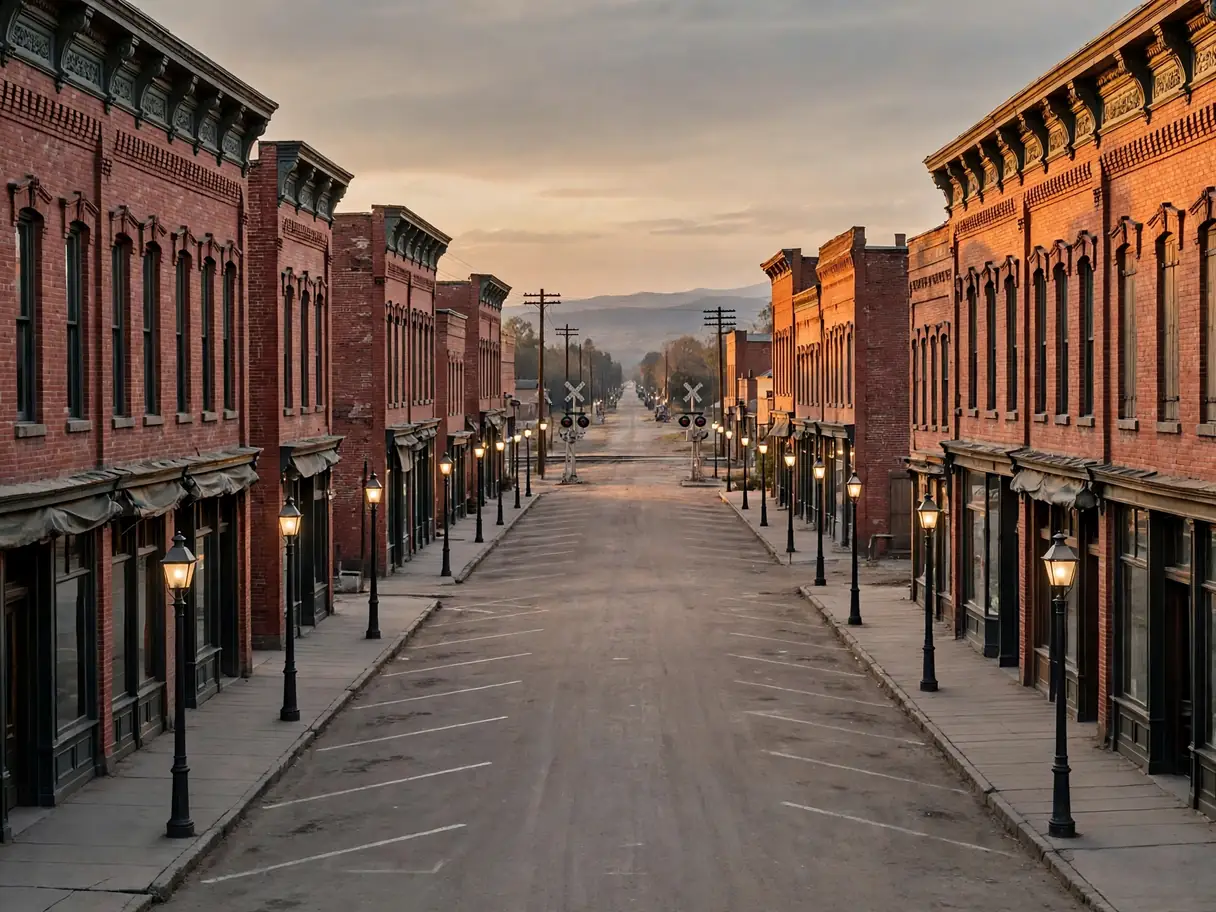
Old Town is Pocatello's original grid: the streets that grew up around the rail yards and the downtown along Main Street and Center Street, a short walk from where the Portneuf River bends through the city. The houses here span every era the city has lived — early-1900s brick homes, craftsman cottages, postwar builds filling the gaps — and the plumbing inside them is a layered history of every material the trade has used: galvanized steel, copper, cast iron, clay, and PVC, sometimes all in one basement.
That makes Old Town the most diagnosis-driven part of our service area, which covers every Old Town street in full. Work here rarely starts with a part; it starts with a question. Is the pressure low because the galvanized run is rusted nearly shut — a repiping conversation? Is the backup a clog, or roots in a clay lateral that needs the camera from sewer line repair? Is the water on the basement floor from the heater, a supply line, or the drain side — the sort of thing leak detection exists to answer before anyone opens a wall?
If you want to see every chapter of water heating in one afternoon, walk Old Town's basements. Tanks shoehorned into closets and crawl spaces, units vented through chimneys that predate them, heaters replaced so many times the corner has outlasted four of them. Water heater repair calls here carry an extra wrinkle: the heater may be young while its connections are ancient, or the tank may be old enough that its label has outlived the company that made it. The hard water does not care either way — 15.2 grains works on every tank on the street, and sediment and corrosion set the schedule.
Replacements in Old Town are rarely plain swaps. A new unit often needs its venting corrected, its gas line or circuit confirmed for the load, an expansion tank the original install never had. That is the substance of water heater installation done properly in an old house: the heater is new, and the system feeding it is brought up to meet it. Owners weighing tankless water heaters here get the honest version — the conversion is very doable, and an older panel or gas supply sometimes needs work first, quoted in the open before anything starts.
Old Town's walls were insulated for coal stoves and milder expectations, and Pocatello's single-digit January nights find every gap. Pipes in exterior walls and unheated basements here freeze and split with a regularity that keeps frozen and burst pipe repair busy until March, and the thaw reveals the rest — which is why an Old Town freeze call usually ends with insulation and a plan, not just a patch, and why an actively spreading leak goes in through emergency plumbing rather than a scheduled visit.
Old Town also carries the city's memory in its drains. The blocks around the old commercial core were plumbed for smaller households and gentler fixtures than they serve now, and the laterals under them have outlived the materials they were laid in. None of that makes the neighborhood fragile — the houses are famously solid — but it does mean a plumber working here reads the system as a whole: water in, water out, and the century of pipe in between. It is a good reason to keep the footage from any camera inspection with the house records. Just north of the old grid, Bonneville runs on the same layered pattern — early homes, old pipe, and owners who have heard it all before.
Call (208) 753-1090 and describe the house as much as the problem — its age, what the pipes are where you can see them, what has been done before. That history is diagnostic gold in Old Town. We connect you with an independent local plumber who works in these houses regularly, tests before quoting, and tells you plainly which layer of your home's plumbing history you are dealing with this time.
FAQ
Old Town holds the city's oldest housing — homes from the early 1900s onward, plumbed and replumbed across a century. Galvanized supply lines, cast iron stacks, and clay sewer laterals are all common, often in the same house, alongside newer sections added during past repairs. That mix is exactly why diagnosis matters here: the pipe in one wall may be ninety years old and in the next, fifteen.
Age, in every form: water heaters long past their expected life, galvanized lines with pressure faded to a trickle, clay sewer laterals opened by roots from the mature street trees, and freeze damage in walls insulated to the standards of another century. The work here leans toward diagnosis first — cameras, pressure tests, and honest repair-versus-replace calls.
Yes. Old Town covers the downtown core and the blocks south of the tracks — all of it is in our service area in full. Wherever your street falls in the old grid, one call connects you with an independent local plumber.
If it keeps happening, the pipe itself is the problem — most often roots in a clay lateral or a section that has cracked or sagged. The fix starts with a camera, which shows the line's actual condition, and ends with a spot repair or a replacement sized to what the footage shows. Repeated cleaning alone just rents the line back a few weeks at a time.
Yes, with the connections brought up to the job: gas lines and venting sized for the new unit, electrical checked, and in tankless conversions, a realistic look at whether an older panel and gas supply can carry it. A plumber assesses the house's systems first, so the new heater gets installed on infrastructure that can actually feed it.
Start with the plumber. Most Old Town backups trace to the home's own lateral — roots, offsets, or a failed section of clay or early pipe — which is the homeowner's side of the line. A camera inspection settles it either way: if the problem turns out to sit in the city's main, you will know with footage in hand.
One call connects you with an independent local plumbing professional serving Pocatello and Chubbuck — Chubbuck, Old Town, Downtown, Bonneville, Alameda, the University District, and Indian Hills.