
Sewer Line Repair
Roots, breaks, and bellies found during cleaning — repair and replacement of the line itself, camera first.
Drain Cleaning — Pocatello, ID
Slow sinks, tubs that will not drain, and main lines backing up — cleared mechanically, the whole pipe, by independent local plumbers serving Pocatello and Chubbuck.
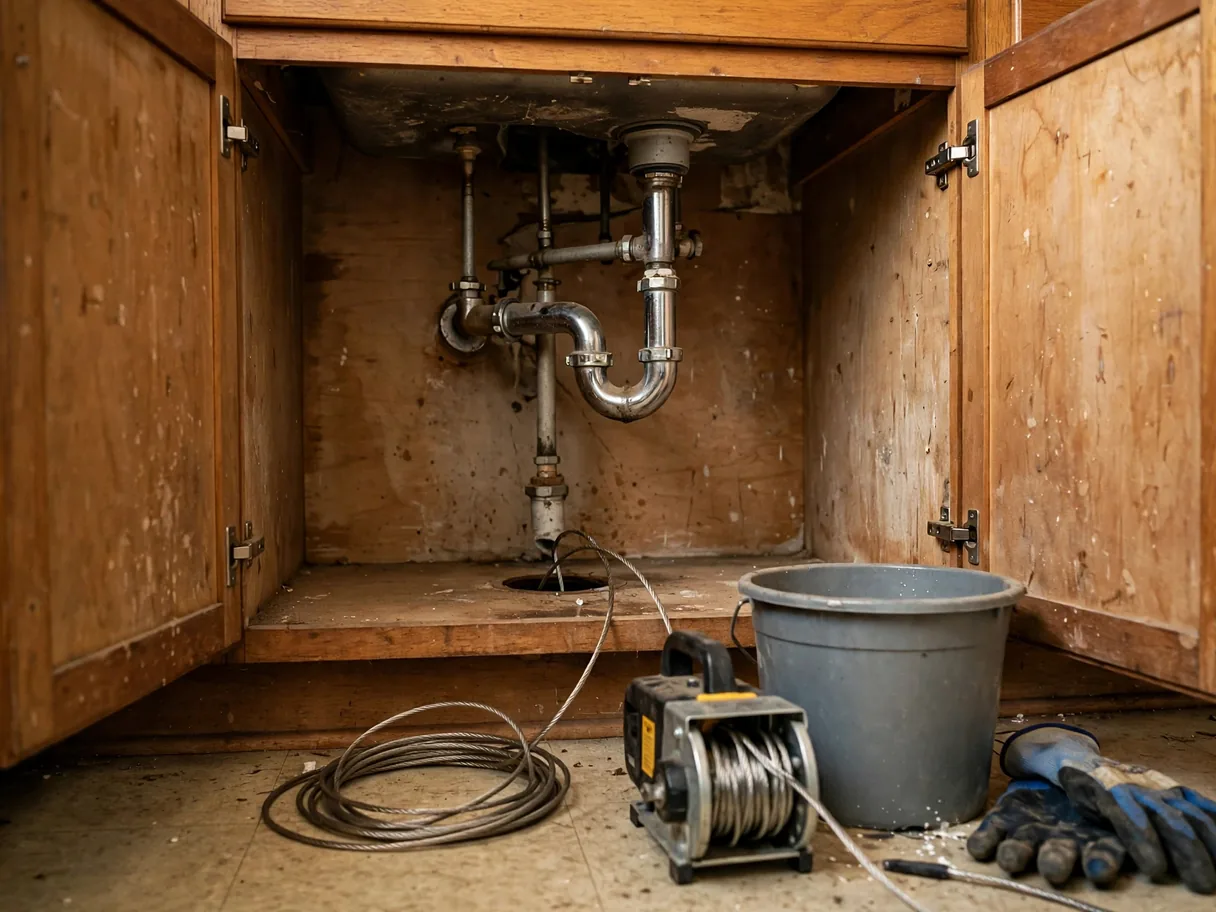
A drain rarely goes from fine to blocked overnight. It slows down over weeks — the kitchen sink holds water a little longer, the tub leaves a ring and a puddle around your ankles, the bathroom sink gurgles when it empties. That slowdown is the pipe narrowing: grease and food film in a kitchen line, hair and soap in a bathroom line, scale and rust in the older cast iron that runs under so many Old Town floors. Drain cleaning done right clears the full width of the pipe with a cable and the right cutting head, so the line drains like it did before — not a pinhole punched through the middle of the clog that closes again in a month.
The plumbers we connect you with clean drains across Pocatello and Chubbuck every day, and the work splits into two kinds. There are fixture drains — one sink, one tub, one toilet, usually hair, grease, or something that should never have been flushed. And there are main lines, where every drain in the house slows at once and the lowest fixtures in the home start to back up. The second kind is the one to treat as urgent, because a main line that finishes blocking sends sewage back into the house, and that call belongs to emergency plumbing.
Kitchen drains clog on grease — poured in liquid, set like wax in the pipe — layered with food scraps and coffee grounds. The fix is a proper cable clean that scrapes the pipe wall, and a short conversation about the grease habit, because no cleaning outlasts a daily pour. Bathroom drains clog on hair bound with soap and toothpaste, usually within a few feet of the fixture, which makes them some of the quicker jobs in plumbing. Laundry drains clog on lint and detergent residue and announce it by overflowing the standpipe mid-cycle.
Under all of it, Pocatello's housing stock adds its own wrinkle. With a median build year around 1971, much of the city drains through cast iron and clay that has had fifty years to roughen, scale, and shift. Those pipes catch clogs that smooth PVC shrugs off, and they are the ones where a recurring clog is often the pipe asking for a closer look — which is where the camera work described under sewer line repair comes in, so a drain problem does not get mistaken for a drain problem when it is really a broken line.
Most clogs are cable work: a spinning cutting head that chews through the blockage and scrapes the pipe wall on the way. Hydro-jetting is the other tool — a high-pressure water jet that scours the inside of the pipe as it travels, washing grease, soap film, and mineral scale off the wall instead of just opening a path through them. It earns its place on grease-heavy kitchen and main lines, on lines that have narrowed with years of buildup, and before a camera inspection, when a clean pipe wall shows cracks and roots far better than a dirty one. It is not the automatic upgrade, though: on fragile pipe — old clay with open joints, cast iron rusted thin, a line already known to be cracked — high-pressure water can push into the damage, so the plumber judges the pipe first, sometimes with the camera, and jets only what the line can take. The right tool follows the pipe's condition, not the price of the machine.
If the toilet gurgles when the washing machine drains, or the basement shower backs up when someone runs water upstairs, the blockage sits in the main line, not in any single fixture. Roots are the usual suspect where big trees stand near the line — they find the joints in older clay pipe and grow in season after season. A plumber clears the line with a heavier machine and cutting head, and if roots are what comes back on the cable, you will hear about the camera and the longer-term options while the line is open and the evidence is in hand.
An experienced plumber reads a drain the way you would read a letter. Grease comes back white and waxy and says the kitchen habit needs changing. Hair comes back in a rope and says the tub trap is doing its slow work. Roots come back as fine white fingers and change the conversation entirely — from cleaning to the health of the line itself, and from a one-time job to a plan. Scale and rust flakes say the pipe is cast iron living out its years. You will hear which one your line produced, in plain terms, because what came out of the pipe decides what is worth doing next — and what is not worth paying for. That report is part of the job, and it is one reason a professional cleaning outlasts a rented machine: the machine clears the clog, but nobody reads it.
Call (208) 753-1090 and say which drains are slow and whether more than one is involved — that one detail tells the plumber whether to bring fixture tools or the main-line machine. The plumber clears the line, runs water to confirm it drains the way it should, and tells you honestly what came out and what it means. If the line shows signs of a break or a belly, that finding leads to leak detection or a sewer camera, quoted separately and only if you want it. Homes in the University District rentals and the older streets of Alameda keep plumbers busy with exactly this work — old pipes, heavy use, and drains that were slow for months before they stopped.
FAQ
A drain that clogs again a few weeks after clearing usually was not fully cleared the first time — a cable punched a hole through the blockage instead of removing it — or the pipe itself has a problem: a belly where water sits, roots entering at a joint, or grease and scale narrowing the line year by year. A plumber who clears it properly and runs a camera when it recurs can tell you which one you are dealing with.
Chemical cleaners rarely clear a real clog; they soften the surface of a blockage and let a trickle through, and the clog comes back. They are also hard on older pipes and make the water in the line hazardous for the plumber who comes next. In older Pocatello homes with cast iron and clay lines, snaking the line mechanically — or hydro-jetting it — clears the whole pipe diameter instead of a hole through the middle.
The cost follows which drain it is and what is in it. A single bathroom sink or tub trap is a smaller job than a main line packed with roots, and a line that needs the camera to find the problem takes longer than a straightforward kitchen clog. Access matters too — a cleanout at floor level is quicker than pulling a toilet. The plumber tells you what the job involves and what it will cost before the cable goes in.
Water backing up in the lowest fixtures first — a basement tub or shower, a floor drain — gurgling from toilets when other water runs, and more than one drain going slow at the same time. Those signs point past a single fixture to the main line, and a main line that is fully blocked will send sewage back into the house. That is the call to make the same day, not after a weekend of plunging.
When a line clogs repeatedly, or when the blockage feels like something solid, the camera goes in after clearing — or before, when the line will not clear at all. It shows roots, cracks, bellies, and grease buildup directly, measured from the cleanout, so the next step is based on what the pipe actually looks like. Our sewer page explains the inspection side of that work.
In the kitchen, grease is the enemy — wipe it and trash it instead of washing it down, because it coats the pipe and catches everything after it. In bathrooms, hair screens on tub and shower drains stop the most common clog there is. And if your home has big trees near the sewer line, a plumber can tell you whether a periodic cleaning schedule makes more sense than waiting for the next backup.
For most homes, cleaning on symptoms is fine — a drain that slows is giving you notice. The exception is a line with a known history: a main line that has backed up before, especially one with roots in it, often does better on a schedule the plumber sets from what the camera showed, so the cleaning happens on a calm weekday instead of during a houseful of guests.
Say which drains are involved and the plumber brings the right machine. One call connects you with an independent local plumber serving Pocatello and Chubbuck.