
Repiping
When one located leak turns out to be the first of many — replacing the system instead of chasing it.
Leak Detection — Pocatello, ID
High water bills, the sound of running water, damp spots with no source — leaks located with listening equipment and pressure testing, not guesswork and a sledgehammer.
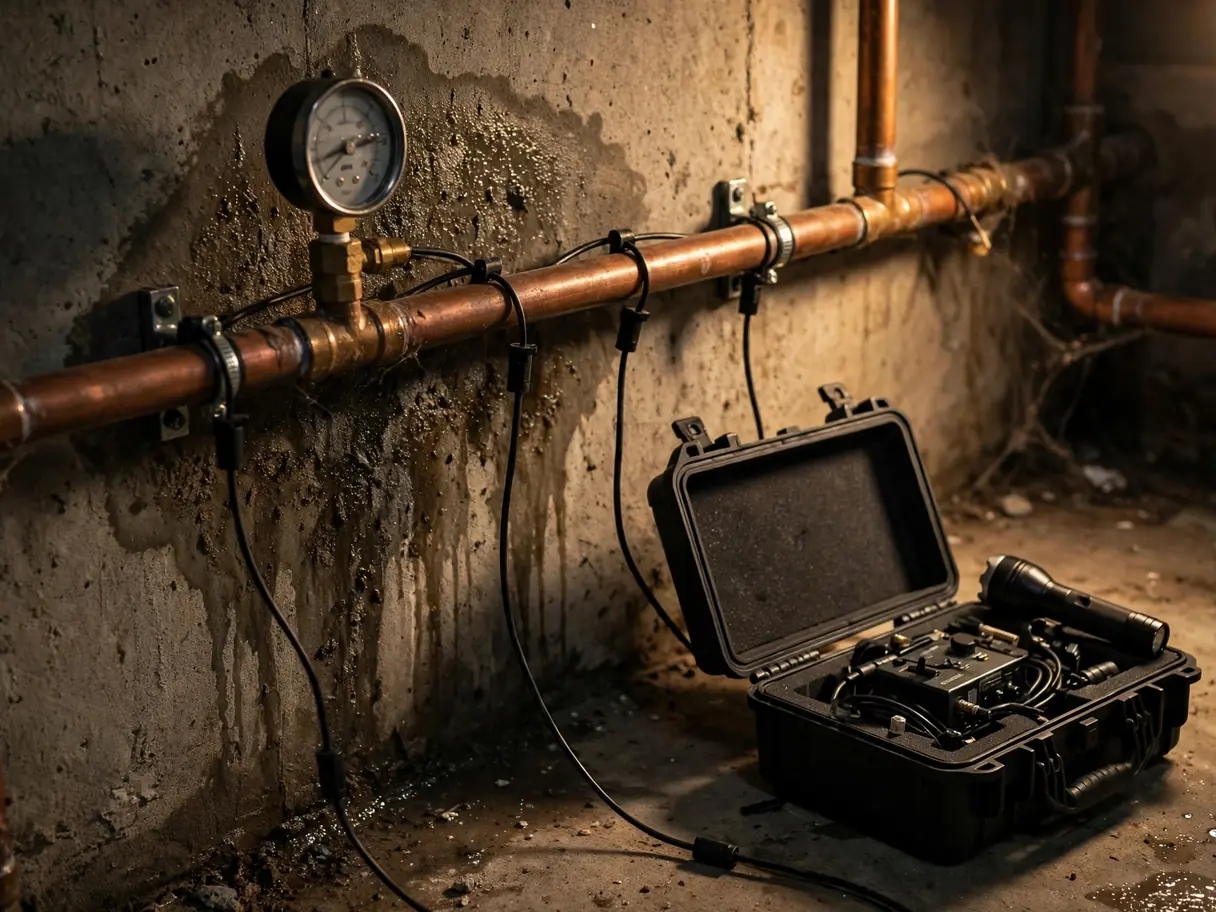
A hidden leak announces itself sideways. The water bill climbs for two months running in a house where nothing changed. The meter dial creeps with every tap off. A section of flooring feels warm, or a basement wall smells musty in a house that has always been dry. By the time water shows on a surface, it has usually been traveling for a while — which is why leak detection is a search before it is a repair. The plumbers we connect you with find leaks in Pocatello homes by testing and listening first, so the hole that gets opened is the size of the repair, not the size of the search.
The work starts with the meter. With the house quiet and every fixture off, a moving meter confirms water is escaping somewhere. Valves then isolate the system section by section — house versus yard line, hot versus cold — and pressure testing shows which part cannot hold. From there, acoustic equipment takes over: pressurized water forcing through a crack or a failed fitting makes a distinct sound that carries through soil, concrete, and flooring, and a trained ear with the right gear follows it to the spot.
The housing stock writes the script here. With a median build year around 1971 and roughly two-thirds of homes built before 1980, much of Pocatello runs on galvanized and copper supply lines that have been corroding from the inside for fifty years. Galvanized pipe lets go at the threads first. Copper develops pinhole leaks, sometimes in a run inside a wall, sometimes under a slab where the first sign is a warm tile and a big bill. Out in the yard, the service line from the meter takes the freeze-thaw cycles and the shifting bench soil, and a leak there can run a long time before the ground above it stays suspiciously green in a dry summer.
Freeze damage writes its own chapter: a pipe that split in a January cold snap but only weeps under pressure can hide until the thaw, which is why spring is leak season in this valley and why it pairs so often with frozen and burst pipe repair. And when the water shows up in a basement with no bill change and no meter movement, the source may be on the drain side instead — the territory of sewer line repair, where the camera does the searching.
A located leak comes with options, and the plumber lays them out at the spot: a single fitting replaced, a section of pipe cut out and renewed, or — when the failed pipe is one of many the same age in the same walls — a conversation about repiping the system before the next pinhole picks its own timing. None of that gets decided under pressure. What detection buys you is certainty: you stop paying for water you never used, and you stop water from quietly working on your floors, framing, and foundation while you decide.
Not every costly leak is buried. The running toilet is the most common water waster in any city — a flapper that no longer seals lets the tank refill in sips around the clock, hundreds of gallons a day, silently. A detection visit checks the unglamorous fixtures too, because there is no sense tracing sound through a slab if the bill is explained by a toilet upstairs. The same goes for irrigation lines that leak only when their zone runs, and water softeners stuck in regeneration, pouring water down the drain for days. Methodical beats exotic: the search starts with the meter and the simple causes, and only climbs toward the slab and the yard line when the evidence points there. That order is what keeps the visit honest and the bill proportionate.
Call (208) 753-1090 and describe what you have noticed — the bill, the sound, the damp spot, the moving meter. That description shapes the first tests the plumber runs. If water is actively spreading through a ceiling or across a floor right now, shut the house water off at the main valve and say so on the call: that is emergency plumbing, and it routes ahead of a scheduled search. For the quiet leaks — the bills and the meter — the search is methodical, and it ends with a mark on the floor or the ground and a repair quote based on a leak that has actually been found, anywhere from Old Town basements to Indian Hills slabs to Chubbuck yard lines.
FAQ
The common signs are a water bill that jumped without a change in your household, the sound of water running when nothing is on, a water meter that keeps moving with every fixture off, damp or warm spots on floors, and musty smells or soft drywall that were not there before. Any one of them is worth a look; two together usually mean water is going somewhere it should not.
They start by narrowing down which part of the system is leaking — the meter test shows whether water is moving at all, and shut-off valves isolate sections. Then they listen and measure: acoustic equipment picks up the sound of pressurized water escaping through floors and ground, and pressure testing confirms which line is losing it. The digging or opening happens at the located spot, not along the whole run.
Detection is priced by the time and equipment the search takes — a leak that shows itself at the meter test and one valve is quicker than one that has to be traced through a slab or out under a yard. The repair is quoted separately once the leak is found, because repair depends on where it is and what the pipe is. You approve the detection first, and nothing about the repair is a surprise sprung afterward.
Yes — a running toilet or a leak in a supply line can pass hundreds of gallons a day, and a line leaking under a yard or slab can run for months before it shows on the surface. Before you call, it is worth checking the obvious: toilets that run intermittently are the single most common cause of a sudden high bill. If the toilets are quiet and the meter still moves with everything off, that is a leak until proven otherwise.
You get the location, the cause, and the repair options — sometimes a single fitting, sometimes a section of pipe that has reached the end of its life, occasionally a run that makes more sense to re-route than to patch. If the failing pipe is part of a whole system of the same age, the plumber may raise repiping as the longer fix. The repair decision is yours, made with the leak pinpointed rather than suspected.
In most cases, yes. Pressurized water escaping under a slab makes noise that acoustic listening equipment can pick up through the floor, and warm-water leaks often show as a warm spot on tile or laminate. The plumber marks the spot from above, confirms it, and only then does any floor come up — over the leak, not across the room.
The search itself is non-destructive — meters, valves, pressure gauges, and listening equipment work from the surface. Only the repair opens anything, and by then the opening is aimed at a located leak rather than a search pattern. A slab repair opens the floor over the spot; a yard line repair digs at the marked location. The plumber explains what the repair will disturb before it starts.
That is a leak until proven otherwise. One call connects you with an independent local plumber who will find it before it finds your floors.